Category Archives: Social web

Twitelection – Twit Was Inevitable Really

Twitelection

We suspect this will be one of many ‘tw-opinion’ polls that use twitter to predict how the nation is feeling about the election, how people plan to vote and ultimately the outcome. 

Twitelection invites users not just to name a party but to use  happy or sad face to express sentiment or emotion in relation to the main parties. It also needs the hashtag #ukvote and of course the name of the party.  There is an option to include postcode information that could be used in conjunction with constituency mapping to predict the outcome in marginal constituencies.

Over time it shows how the twelectorate (Ok that’s enough….ed) are feeling about the parties rather than simply how they will vote. Twitelection Voting Rules

At present there aren’t quite the volume of tweets out there to make this a meaningful assessment of real changes attitude to the party but it is early days and as the campaign and the tweets ramp up it could become part of our daily election stat diet.

Why Tom Watson MP is Only Half Right (or Half Wrong) on TV

This evening at Millbank tower, political blogger and journalist Paul Evans hosted a panel of digitally aware politicians and commentators that included Tom Watson MP, Jeremy Hunt MP and the Evening Standard’s Deputy Political Editor Paul Waugh.  They were there to debate the subject of social media and the election.  Given that’s precisely the subject of this blog we felt it was right to be there.

Tom Watson told us that he was going to tell it like it is.  According to Tom how it is, is that this will be the UK’s first TV election rather than the inaugural plebiscite where the plebeians moderate the debate.  Putting aside the fact that this would put us 50 years behind the USA where the Kennedy Nixon run off was regarded as the first TV election, what Tom has missed is what every top TV exec now knows.  Social media has become  a critical component of event television and event television is what is keeping the broadcasters in business.

The concept is known as “two-screen” and the channel of choice is most often twitter.  When Cameron, Clegg and Brown get up in front of the tv cameras it will be one of the biggest ever political tv events and it will be the ‘two-screeners’ who decide whether one or other candidate is too shifty to elect.  The likes of Paul Waugh and other social media savvy scribes will be watching with fascination before they channel the views of the twitterati through the mainstream media.  For a social media trailblazer Watson’s got some catching up to do.

David Cameron Watching David Cameron


The user-generated mashup that has been the scourge of pre-election advertising campaigns this year is also coming to a video clip near you.

There is a wonderfully irreverent site called Speechbreaker.co.uk that allows users to re-edit speeches by the three main party leaders. It’s quick and fun and you can post the results to YouTube.  Some enterprising users are using alternative videos over which to dub the audio with some almost disturbing results, as you can see for yourself.

Grass Roots Campaign for Vince Cable to be Chancellor #invincecable

There is a lot of debate as to whether social media will play a truly significant role in the coming election or not.  The nay-sayers point to the fact that we have no Obama-like figure around which support can coalesce and the short nature (less than four weeks) of the official general election campaign.

A key aspect of the social web is that it allows like-minded people, even those that are not politically active in the traditional sense, to build campaigns around a particular interest or objective.  One such campaign is that gathering traction on the social web is a campaign to promote Liberal deputy leader Vince Cable as the post election Chancellor of the Exchequer.   The campaign has a wiki, website, invincecable.org.uk, a  slogan “In Vince Cable we Trust” and the inevitable hashtag #invincecable.

With the Liberal vote hovering around 19% this campaign surely has no chance having any impact.  The Liberals just can’t win.  Like many things it isn’t that simple.  The latest polls point at a hung parliament.  To avoid a second plebiscite a coalition government may be on the horizon.   Any coalition would include Liberal Democrats.  Whilst not exactly Obama-like Vince Cable is one of the few political figures in the UK that excites interest across the party lines.

The economic crisis will inevitably deepen as public spending falls after the poll.  There is growing consensus that the economic challenges we face require a depth of economic understanding that Osborne, Darling (or Balls) just don’t have.

If the people say loud enough that they want Cable in Number 11 they might just get him.

Angry Gordon’s Avatar – the Taiwanese Movie


Apple Daily, a newspaper and website based in both Hong Kong and Taiwan has used computer graphics to recreate the alleged bully boy tactics of the prime minister. The video is gaining traction on news sites in the UK and through social networks.

Whilst hardly in the James Cameron league when it comes to CGI the clips graphically illustrate the nature of the claims made by journalist Andrew Rawnsley and even exceed his allegations in terms of the severity of the alleged acts. Whilst somewhat slapstick in their delivery this clip can’t do the prime minister much good at home or abroad.

Is the On-Line Electoral Campaigning Moving Up a Gear?

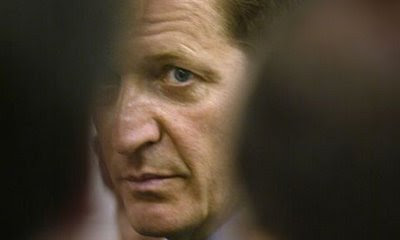
In an article in The Times today Alastair Campbell claims that the social web has altered the power balance in political campaigning. “The internet and, in particular, social networking have changed the terms of the relationship between the parties, the media and the public, taking at least some of the power to influence away from parties and media, to the benefit of the public”.

The former journalist and spin doctor supreme has himself embraced the social web and so may be well placed to judge.  He is a regular blogger and his twitter account @campbellclaret (claret here is a reference to his beloved Burnley football team rather than Burgundy wine – Campbell is teetotal) has over 15 thousand followers.  Political blogger Iain Dale names Campbell as the number 2 Labour twitterer after the Prime Minister’s wife. 

Compared with the US presidential election of 2008 the level of engagement via the social web has been low in the run up to the 2010 UK general election but there are many politicians experimenting with on-line dialogue.   There are now signs that all of the major parties are stepping up their on-line activity.  It could be that the phony war is over and Alastair Campbell, so influential in previous elections, has just fired the starting gun on the social media election battle.

Loony Slogan ‘A Future Fun Fair for All”

In the hours following the Labour Party Rally in Coventry where  the Prime Minister unveiled Labour’s vision for the country under the slogan “A Future Fair For All” the twitterverse was awash with the rumour that the Official Monster Raving Loony party had adopted a very similar slogan “A Future Fun Fair For All’.

The official home page for the Raving Loonies throws doubt on the veracity of the claim.  There is no mention of it at all. The likelihood is that it is a product of witty twittering.   It does suggest that one of the biggest effects of the social web during the election campaign will be the spoofing of parties, candidates and especially leaders. We have already seen it with the fabulous Cameron posters. We are going to see it again. And again.

How Long Before We Vote Online?

Brown has fuelled the debate on electoral reform by proposing the Aussie style alternative vote (AV) system for parliamentary elections.  If it happens this may be the last time we put a cross on a ballot paper as the AV system is a preference vote that requires numbers in the boxes.  But should we be using those dreadful little pencils at all.  Isn’t it about time that we started to look at electronic voting from our PCs or smartphones?  If we can safeguard bank transactions surely we have the wit to make online voting secure. 

Cost cutting measures will see many of the official counts not even starting until the morning after the election (it is cheaper to pay counters for day time work).  In the event of a hung parliament there is a real danger that the election won’t be decided until all of theses votes are in.   Though there is little doubt that the media and the exit polls will have an accurate prediction minutes after the booths close. 

Why aren’t the major parties talking about electronic voting?  Is it perhaps because it is a short step from electronic voting every five years to regular referenda on line and a more direct style of democracy?  No that really would piss on the collective chips of our elected representatives.

Why Sarah Brown’s Million Mums Won’t Save Gordon

In the run up to the US presidential election Obama was building a fan base on social networks like Twitter and Facebook, using his infamous blackberry to tweet from the trail.  Not so for the major contenders in the UK 2010 election. Cameron has stated his belief that “too many twits make a twat” (although airbrushed campaign posters seem to have a similar effect).  Gordon Brown flirted with the service a couple of years ago but now prefers his wife to do the tweeting.

Gordon has form for wheeling Sarah in when the going gets tough and the media picked up on the ‘social Sarah‘ effect during the Last Labour conference.  The party apparatchiks will be well aware that Mrs B has amassed well over a million followers on Twitter.

Sarah Brown like the leader of the opposition is an ex PR person and there is anecdotal evidence that Sarah’s twitter account is being used as a PR channel.

  • Sarah tweets a lot. Eight times yesterday.  This is an acknowledged way of building a fan base.
  • The page is linked to the Million Mums campaign to enlist people to speak out against needless deaths of women in pregnancy and childbirth around the world.
  • Old tweets are deleted – there is nothing earlier than December.

If Labour does believe it has an ace up its party sleeve with this twitter account I think they are mistaken.  A million is a big number but there are lots of foreign accounts and plenty of spam bots amongst them, neither group boasts a vote in the British plebiscite.  More than half of registered twitter users are inactive.  Furthermore if Sarah Brown deviates from her stated aim of raising awareness to counter deaths of women in pregnancy and childbirth and gears up to be part of the vote machine she will lose credibility and authenticity – and on social networks people deal in the currency of the authentic.

MPs Gear Up to Campaign on Twitter … Oh No They Don’t

‘MPs turn to Twitter to talk to voters’ shouts the headline on the Daily Telegraph site today.  If the august, if conservative (small ‘c’) columns of the Telegraph are saying it then it must be so.  Well it aint.   Yes there are lots of MPs on Twitter now, if you call just over a hundred out of 646 MPs a lot.

Taking its most of the stats from Tweetminster the Telegraph also notes that John Prescott has over 13,000 followers (at the time of publication it was actually slightly under).  Hardly enough to guarantee  a Labour landslide.   With months to go before the US presidential election the candidates were counting their online support in terms of many hundreds of thousands.  Most MP candidates have a few hundred followers.  In fact @Election10 beats a lot of them hands down.   The online influence of bloggers like Guido is far greater than any MP or parliamentary prospect.

There are only weeks to go and whilst the web will undoubtedly play a bigger part than ever before it’s not the MPs who will be setting the agenda, least of all with their paltry twitter followings.