George Osborne Won’t Fight Election

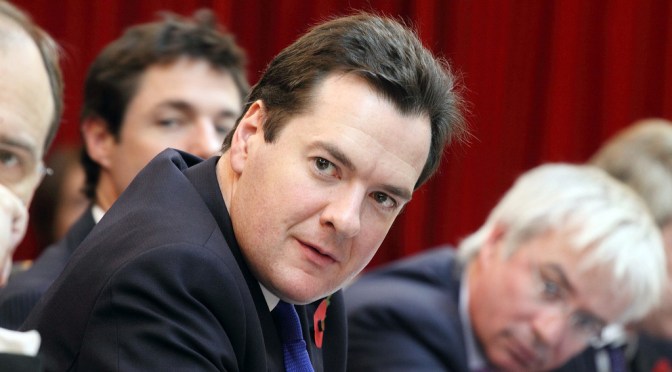
George Osborne is quitting as an MP.

In a letter  to Conservatives in his Tatton constituency, he said: “I am stepping down from the House of Commons – for now. But I will remain active in the debate about our country’s future and on the issues I care about, like the success of the Northern Powerhouse.

“At the age of 45, I don’t want to spend the rest of my life just being an ex-Chancellor. I want new challenges.  I’m very excited about the opportunity to edit the Evening Standard. I’ve met the team there, and their energy and commitment to this great newspaper are positively infectious.”

He was regarded as  a likely  future PM until the Brexit  vote. His Tatton seat is regarded as a very safe Tory constituency.
Why Now Theresa May?

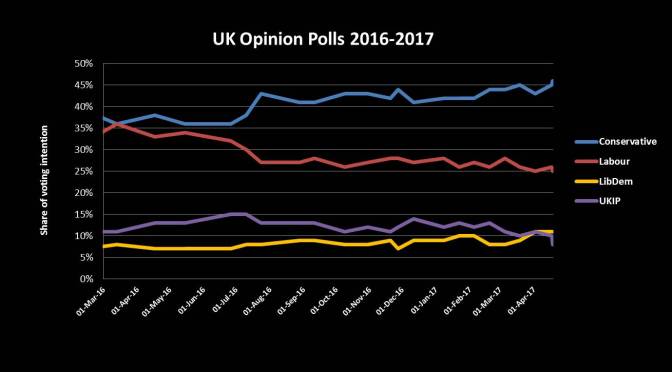
It’s fairly clear why Theresa May  chose to call a General Election. Twelve months ago Conservative and Labour were tied but in the last twelve months the Tories have opened up a 20 point lead. It’s difficult to see how that can be eroded in just 7 weeks.

There are a few questions that leap out. We have just 23 months to sort the Brexit negotiations and two of them will now be taken up with domestic politics.  The government was in power with a working majority until May 2020 so the election isn’t necessary  and it is a distraction.   An election could have been called months ago when the Tories had a comfortable 16 point lead. That way it would have been done and dusted before Article 50 was triggered . So why now?

Is Gorton a factor? The Gorton by-election set for May 4th is highly unlikely to now take place because Parliament will be in recess. The elected candidate would not be able to take their seat. A recent report in The Observer  suggested it was a two horse race between Labour and the LibDems  with 82% of the vote between them. With the Greens getting almost 10% last time round and George Galloway standing as an independent there was a very real chance the Conservatives would lose their deposit.

Perhaps even more worrying for the Prime Minister  is the fact that 12 police forces  passed files to the Crown Prosecution Service in recent months over allegations  Conservative MPs broke local spending limits at the last general election.   Around 20 MPs are  said to be under scrutiny.  If any cases were to go to court not only would it be highly embarrassing  it could erode the party’s working majority which stands at just 17.   Was that a factor?

Maybe.

Update 19.03 18.4.17 – The CPS has told Channel Four News that 30 individuals are under investigation.

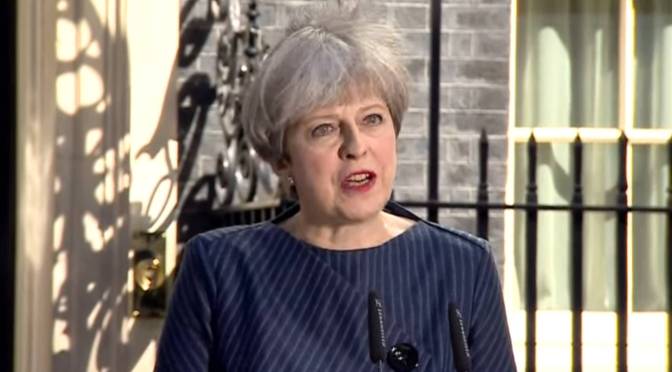
PM Theresa May’s Election Announcement: Full Transcript.

“I have just chaired a meeting of the Cabinet, where we agreed that the Government should call a general election, to be held on June 8. I want to explain the reasons for that decision, what will happen next and the choice facing the British people when you come to vote in this election.

“Last summer, after the country voted to leave the European Union, Britain needed certainty, stability and strong leadership, and since I became prime minister the Government has delivered precisely that. Despite predictions of immediate financial and economic danger, since the referendum we have seen consumer confidence remain high, record numbers of jobs, and economic growth that has exceeded all expectations. We have also delivered on the mandate that we were handed by the referendum result.  Britain is leaving the European Union and there can be no turning back and as we look to the future, the Government has the right plan for negotiating our new relationship with Europe.

“We want a deep and special partnership between a strong and successful European Union and a United Kingdom that is free to chart its own way in the world. That means we will regain control of our own money, our own laws and our own borders and we will be free to strike trade deals with old friends and new partners all around the world. This is the right approach, and it is in the national interest. But the other political parties oppose it. At this moment of enormous national significance there should be unity here in Westminster, but instead there is division. The country is coming together, but Westminster is not.  In recent weeks Labour has threatened to vote against the deal we reach with the European Union. The Liberal Democrats have said they want to grind the business of government to a standstill.  The Scottish National Party say they will vote against the legislation that formally repeals Britain’s membership of the European Union and un-elected members of the House of Lords have vowed to fight us every step of the way. Our opponents believe that because the Government’s majority is so small, our resolve will weaken and that they can force us to change course. They are wrong. They under-estimate our determination to get the job done and I am not prepared to let them endanger the security of millions of working people across the country. Because what they are doing jeopardises the work we must do to prepare for Brexit at home and it weakens the Government’s negotiating position in Europe.If we do not hold a general election now their political game-playing will continue, and the negotiations with the European Union will reach their most difficult stage in the run-up to the next scheduled election.

“Division in Westminster will risk our ability to make a success of Brexit and it will cause damaging uncertainty and instability to the country, so we need a general election and we need one now, because we have at this moment a one-off chance to get this done while the European Union agrees its negotiating position and before the detailed talks begin. I have only recently and reluctantly come to this conclusion.

“Since I became Prime Minister I have said that there should be no election until 2020, but now I have concluded that the only way to guarantee certainty and stability for the years ahead is to hold this election and seek your support for the decisions I must take.

So tomorrow I will move a motion in the House of Commons calling for a general election to be held on the eighth of June. That motion, as set out by the Fixed-Term Parliaments Act, will require a two-thirds majority of the House of Commons.

So I have a simple challenge to the opposition parties, you have criticised the Government’s vision for Brexit, you have challenged our objectives, you have threatened to block the legislation we put before Parliament.

“This is your moment to show you mean it, to show you are not opposing the Government for the sake of it, to show that you do not treat politics as a game. Let us tomorrow vote for an election, let us put forward our plans for Brexit and our alternative programmes for government and then let the people decide and the decision facing the country will be all about leadership. It will be a choice between strong and stable leadership in the national interest, with me as your Prime Minister, or weak and unstable coalition government, led by Jeremy Corbyn, propped up by the Liberal Democrats – who want to reopen the divisions of the referendum – and Nicola Sturgeon and the SNP. Every vote for the Conservatives will make it harder for opposition politicians who want to stop me from getting the job done.

“Every vote for the Conservatives will make me stronger when I negotiate for Britain with the prime ministers, presidents and chancellors of the European Union. Every vote for the Conservatives means we can stick to our plan for a stronger Britain and take the right long-term decisions for a more secure future. It was with reluctance that I decided the country needs this election, but it is with strong conviction that I say it is necessary to secure the strong and stable leadership the country needs to see us through Brexit and beyond So, tomorrow, let the House of Commons vote for an election, let everybody put forward their proposals for Brexit and their programmes for Government, and let us remove the risk of uncertainty and instability and continue to give the country the strong and stable leadership it demands.”

Theresa May in Shock Call for June 8 General Election

At 11.05am today Prime Minister Theresa May announced that there will be an early UK General Election on Thursday June 8th.  In a political speech which marked the  start of the campaign , she criticised the other parties in the context of their stance on Brexit: “If we do not hold a general election now, their political game playing will continue” she  said.

The election requires a motion in the House of Commons to be passed by a two thirds majority. That motion will be tabled tomorrow.  The Labour Party alone could block the motion but May has clearly calculated  that they won’t want to be accused of running scared.   The current Tory lead  over Labour stands at 18 points which if that was repeated in the vote would deliver a Tory landslide.

A Million Call for Ban on Trump UK Visit

The petition calling to “Prevent Donald Trump from making a State Visit to the United Kingdom” passed a million signatures at 9.54am today (30 January 2017).  It gained a million supporters in less than 24 hours and is the 2nd quickest ever on the UK Government and Petitions website to hit gain a million supporters after the Brexit 2nd referendum petition, which eventually gained over 4 million backers.

A debate in parliament is triggered when any petition reaches 100,000 so a debate in Westminster Hall at least, is already guaranteed.  It will be much more difficult for the government to dismiss this public plea however, compared with Brexit petition. There will be calls from opposition parties for the debate to be held in the House of Commons.

Firstly there’s been no referendum on the Trump visit. More significantly the government will have to weigh up the advantages of a state visit compared to the likelihood that many of those who have put their names to the  petition will make a more public protest if Trump sets foot on British soil. The invitation was intended as a cornerstone of the special relationship. Given Trump’s apparent thin skin, it seems likely that a visit plagued by public protest would do demolish and deals with the US government than to shore them up.

The government is expected to confirm details of the parliamentary debate by tomorrow.

Theresa May’s First Cabinet in Full

Cabinet ministers
Prime Minister The Rt Hon. Theresa May MP
Chancellor of the Exchequer The Rt Hon. Philip Hammond MP
Secretary of State for Foreign and Commonwealth Affairs Boris Johnson MP
Secretary of State for the Home Department The Rt Hon. Amber Rudd MP
Secretary of State for Exiting the European Union The Rt Hon. David Davis MP
Secretary of State for Defence The Rt Hon. Michael Fallon MP
Secretary of State for International Trade The Rt Hon. Liam Fox MP
Lord Chancellor & Justice Secretary The Rt Hon. Liz Truss MP
Secretary of State for Education The Rt Hon. Justine Greening MP
and Minister for Women and Equalities
Secretary of State for Health The Rt Hon. Jeremy Hunt MP
Secretary of State for Work and Pensions The Rt Hon. Damian Green MP
Secretary of State for Business, Energy and Industrial Strategy The Rt Hon. Greg Clark MP
Secretary of State for Environment, Food and Rural Affairs Andrea Leadsom MP
Secretary of State for International Development The Rt Hon. Priti Patel MP
Secretary of State for Scotland The Rt Hon. David Mundell MP
Secretary of State for Wales The Rt Hon. Alun Cairns MP
Secretary of State for Northern Ireland The Rt Hon. James Brokenshire MP
Secretary of State for Communities and Local Government The Rt Hon. Sajid Javid MP
Secretary of State for Transport The Rt Hon. Chris Grayling MP
Secretary of State for Culture, Media and Sport Karen Bradley MP
Chancellor of the Duchy of Lancaster The Rt Hon. Patrick McLoughlin MP
Leader of the House of Lords The Rt Hon. The Baroness Evans of Bowes Park
Minster for the Cabinet Office Ben Gummer MP

The Boris Guide to Global Influence

Boris Johnson has been preparing for years to be Foreign Secretary. In a special BoJo guide to global diplomacy we remind you of how he has described the world leaders and nations that he will now have to work with and influence:

INTERNATIONAL LEADERS

Barack Obama, US President –  a “part-Kenyan” with  an “ancestral dislike” of Britain.

Hillary Clinton, Democratic Nominee for US President – “like a sadistic nurse in a mental hospital”.

Queen Elizabeth ll – loves the Commonwealth because “it supplies her with regular cheering crowds of flag-waving piccaninnies.”

Recep Tayyip Erdoğan,  Turkish president –  “a terrific wankerer”.

NATIONS

China – “Chinese cultural influence is virtually nil, and unlikely to increase.”

Greece – “They make us pay in our taxes for Greek olive groves, many of which probably don’t exist.”

Papua New Guinea – “orgies of cannibalism and chief-killing”.

Ireland –  St Patrick’s day  celebrations are “lefty crap”.

The Congo – “tribal warriors who will all break out in watermelon smiles”.

Canada – Actually Boris seems to like Canada. It’s where he based himself whilst Mayor of London for much on the London Riots of 2012.

The Results and the Headlines

It was the most unpredictable night in political history.

No-one foresaw that David Cameron would win an outright majority.  The Labour party had more votes but fewer seats than 2010. The Liberal Democrats have been all but wiped out.

Big beasts of Westminster who won’t be returning include Vince Cable, Jim Murphy, Douglas Alexander, Danny Alexander, Lynne Featherstone,  Simon Hughes,  employment minister Esther McVey and of course Ed Balls.

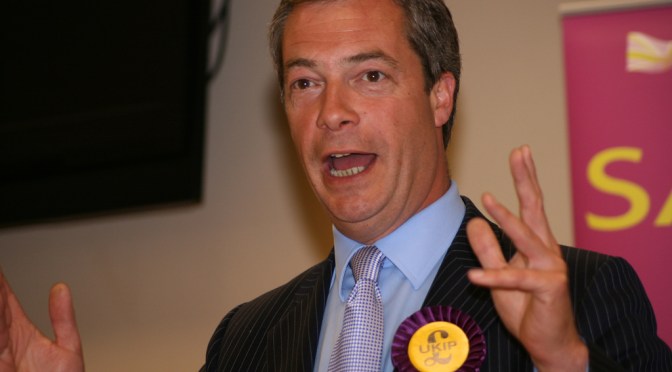
Nigel Farage failed in South Thanet and has still never been an MP.

The SNP are the third party with 55 seats.

The polls said too close to call but in the end the Tories had a clear win.

Posts about elections and politics in general with a particular interest in how social media impacts on the political process.